Part One: Life as a House
by Polydina Flynt
Kevin Kline plays George Monroe, a man dying quietly inside long before the cancer hits. His estranged son, Sam — played by a raw and electric Hayden Christensen — is introduced as everything George isn’t. Angry. Numb. Disconnected. But as the film unfolds, the cracks start to show, and something honest pushes through the silence.
At its core, Life as a House is about breaking free from your plastic days.
It opens with one of the most subtle juxtapositions I’ve ever seen — the morning routines of father and son. Two people moving through their lives in perfect disconnection. Their jobs, schools, routines — all feel like prisons or factories. “They throw kids at the wall,” George says, “and a few manage to climb it. Instead of building a ladder. Or teaching them to build a door.”
It’s a film about emotional traps. The job you hate. The father who never said anything real. The mother (played by Kristin Scott Thomas) who is exhausted and beautiful in a way that only surfaces when she begins to feel again. The kid acting out in ways that nobody really knows how to help.
There’s male prostitution, death, addiction, spoiled arrogance, and the kind of silence between people that feels worse than violence. No one knows how to change. But George tries. And that’s what makes him a hero.
The music is gorgeous — crashing waves over slow realizations — and the acting hits where it counts. Kline’s performance is restrained but brimming. You can see a man who gave 20 years to a job he hated, only to realize he’s been invisible his entire life. The film lets that truth breathe.
This is a film about teenagers who don’t know how to show what they need. It’s about parents too lost to ask the right questions. It’s about what happens when someone finally tries.
One of the most underrated, emotionally honest films I’ve ever seen.
“Your job, your purpose is to get accepted, get a cute girlfriend, think up something great to do with the rest of your life. What if you’re confused and can’t imagine a career? What if you’re funny looking and can’t get a girlfriend? … The terrible secret is that being young is sometimes less fun than being dead.”
— Hard Harry, Pump Up the Volume
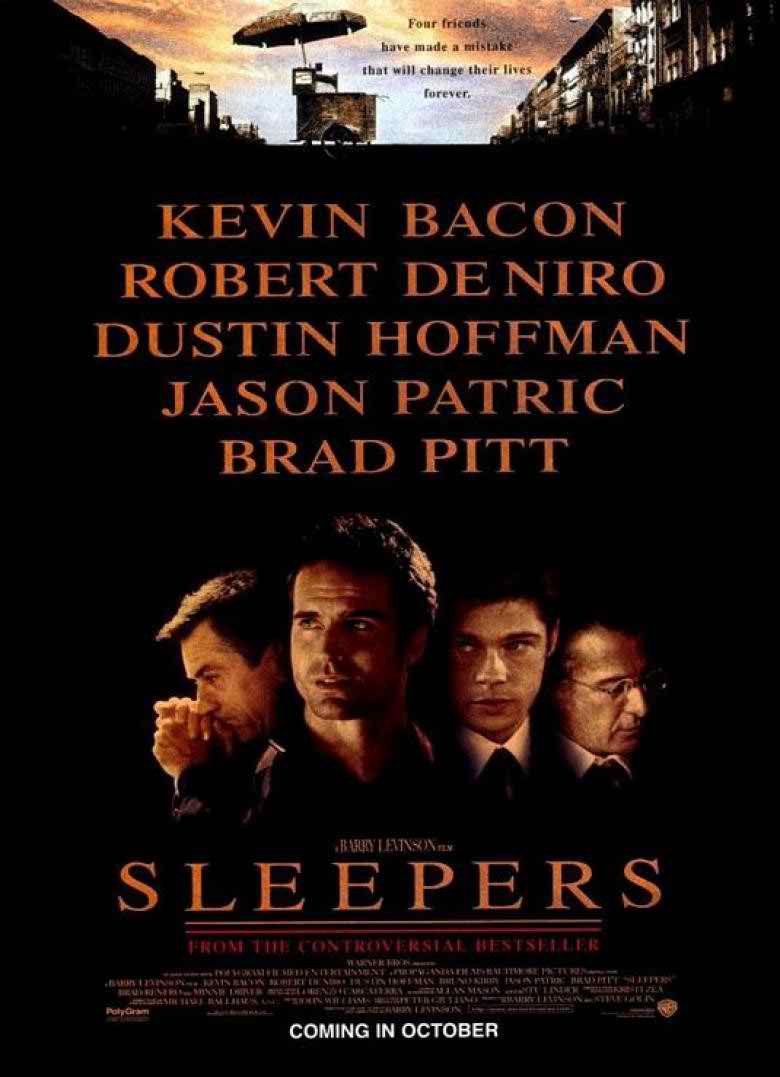
Part Two: Sleepers
by Polydina Flynt
Sleepers is a film that too few people talk about.
And yet, it’s unforgettable.
Jason Patric’s voice — low, haunted — carries the weight of a story built on innocence lost, pain endured, and revenge coldly, methodically served. The music is quiet, haunting, and mournful. It seeps in like trauma does. Slowly. Permanently.
It’s 1966. Hell’s Kitchen, New York.
The kind of neighbourhood you grow up in and swear you’ll never return to.
Four boys: streetwise, fearless, and barely scraping by. They’re content with the little they have. Basketball, dirty jokes, girls, the church. Life is ruled by Catholic guilt and street justice, both brutal in their own ways. But there’s love there, too. Father Bobby — played by a tough, tender Robert De Niro — keeps a close eye on them. Tries to steer them right.
There’s a code. Even if they’re always one prank away from the edge.
🛑 Spoilers Below This Point
One prank goes too far. And what follows is one of the most painful turns I’ve ever seen in film.
The boys are sent to a juvenile detention center. And what happens there destroys them.
Kevin Bacon plays Nokes, a guard and a monster, in a role so effective it makes your stomach churn. The abuse isn’t overdone. It’s not sensationalized. But it is real. And it lingers. You watch these kids try to hold onto something human while the world erases them.
By the time they’re adults, that pain hasn’t faded — it’s fossilized. Two of them become killers. One becomes a reporter. One becomes the lawyer in the courtroom. And they use the only tools they have left — loyalty and rage.
Sleepers becomes a courtroom drama, but it never stops being a coming-of-age tragedy. It’s about what the system takes. About boys who were soft like bread, forced to become cold inside just to survive.
“That street is like a soup dish of life. You guys are soft like bread.”
— Fatman
And somehow, through the grief, the film still finds room for dignity.
It isn’t just about what was lost.
It’s about what they manage to hold on to.
 he turned into a computer error